When exploring the advanced world of laser technology, many professionals find themselves asking, "what is the difference between CO2 and fiber laser?" Understanding this distinction is crucial. According to the 2022 Laser Institute of America report, CO2 lasers are known for their ability to cut and engrave materials like wood and acrylic efficiently. In contrast, fiber lasers bring remarkable precision and speed when working with metals and other reflective materials.
Dr. Emily Thompson, a leading expert in laser technology, emphasizes the importance of this comparison. She stated, "The choice between CO2 and fiber lasers can significantly impact productivity and quality in various applications." This quote underlines the practical implications of selecting the right laser type.
While CO2 lasers offer versatility, they require more maintenance. Conversely, fiber lasers may have a steeper initial cost but generally lower operating expenses. It is important for businesses to weigh these factors carefully. The right choice ultimately depends on the specific requirements and materials involved, making this a nuanced decision. An informed selection can lead to enhanced performance and efficiency, ultimately driving better results.
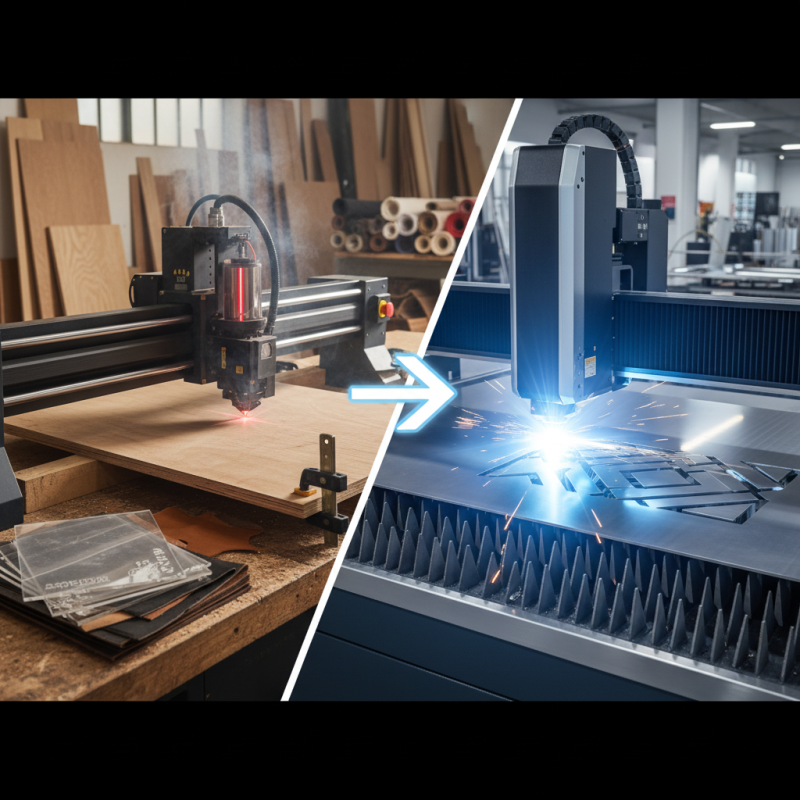
CO2 lasers are widely used in various industries due to their versatility. They emit infrared light, primarily using a gas mixture of carbon dioxide. This type of laser is especially effective for cutting, engraving, and marking materials like wood, plastics, and metals. Many manufacturers prefer CO2 lasers for their ability to handle thicker materials compared to fiber lasers.
When considering CO2 lasers, it's important to understand their limitations. While they excel at engraving, their cutting speed can be slower on certain materials. This can lead to longer production times. Additionally, CO2 lasers require regular maintenance and alignment, which can be cumbersome for some operations.
Tips: When using a CO2 laser, ensure proper ventilation. The gases released during the cutting process can be harmful. Regularly check optics to maintain beam quality. A clean lens leads to better results.
Moreover, the technology behind CO2 lasers is constantly evolving. Innovations aim to improve efficiency and output quality. However, businesses should be aware of the initial investment and longer setup times. These factors can influence decision-making when choosing between CO2 and fiber lasers.
: Fiber lasers use optical fibers instead of gas, resulting in a compact design and better energy transfer.
Yes, they can handle metals and plastics, allowing for intricate designs and fine detailing in various applications.
Evaluate the initial costs and the potential return on investment for your specific needs and applications.
Fiber lasers are low-maintenance due to their solid-state design but understanding their setup is important for efficiency.
Proper training helps prevent costly downtime and ensures correct usage, especially regarding cooling and alignment requirements.
Fiber lasers generally are more durable, with better shock resistance and fewer parts prone to wear, but require careful handling.
Maintain a dust-free workspace to enhance the performance and longevity of the laser system.
Yes, specialized knowledge is needed. Ignoring setup requirements can lead to reduced efficiency and potential downtime.
Attend workshops or webinars to learn about the latest developments in laser technology and improve your skills.
While initial costs are higher, fiber lasers can result in long-term savings due to lower maintenance needs and higher reliability.
The article "Top 10 Differences Between CO2 and Fiber Lasers Explained" delves into the fundamental aspects of CO2 and fiber lasers, highlighting their unique technologies and diverse applications. It begins by detailing what CO2 lasers are, including their operational principles and common uses in industries such as cutting and engraving. The discussion then shifts to fiber lasers, outlining their mechanisms and versatile applications, particularly in metal processing and material handling.
A comparative analysis between the two laser types showcases their efficiency, providing insights into scenarios where one may outperform the other. Additionally, cost considerations are examined, offering a perspective on the financial implications of choosing CO2 versus fiber laser technologies. The article concludes with a focus on maintenance and durability, comparing the longevity and upkeep requirements of both systems. Ultimately, it addresses the key question: what is the difference between CO2 and fiber laser, illustrating how these distinctions can inform decision-making in selecting the appropriate laser technology for specific needs.

 Zico Machine